Long before Ranthambore became known for its tigers, it was known for its fort. Ranthambore Fort sits atop a rocky hill roughly 700 feet above the surrounding forest, and its walls have watched over this land since around the 10th century.
A Brief History
Built by the Chauhan Rajputs, the fort changed hands numerous times over the centuries — besieged by Alauddin Khilji’s forces in the early 14th century, later controlled by various Rajput and Mughal rulers, before eventually passing to the Kachwaha rulers of Jaipur. Its defensive position, protected on most sides by cliffs and dense forest, made it one of the more formidable forts in the region. In 2013, it was inscribed as part of the “Hill Forts of Rajasthan” UNESCO World Heritage Site.
What You’ll See Inside
- Ganesh Temple: an active temple within the fort walls, popular with pilgrims and said to receive letters addressed to Lord Ganesh from across India.
- Battis Khamba Chhatri: the “32-pillared cenotaph,” one of the fort’s most photographed structures.
- Jogi Mahal: at the base of the fort, beside Padam Talab, home to one of India’s largest banyan trees.
- Ramparts and gates: multiple layered gateways designed to slow any advancing army, still largely intact.
Visiting Practicalities
The fort is open to visitors independently of the tiger safari — you don’t need a safari permit to see it, and entry is generally free or a nominal fee. It’s best visited in the cooler early morning or late afternoon, since the climb and the exposed stone courtyards get hot by midday. Comfortable walking shoes are a must; parts of the path are uneven.
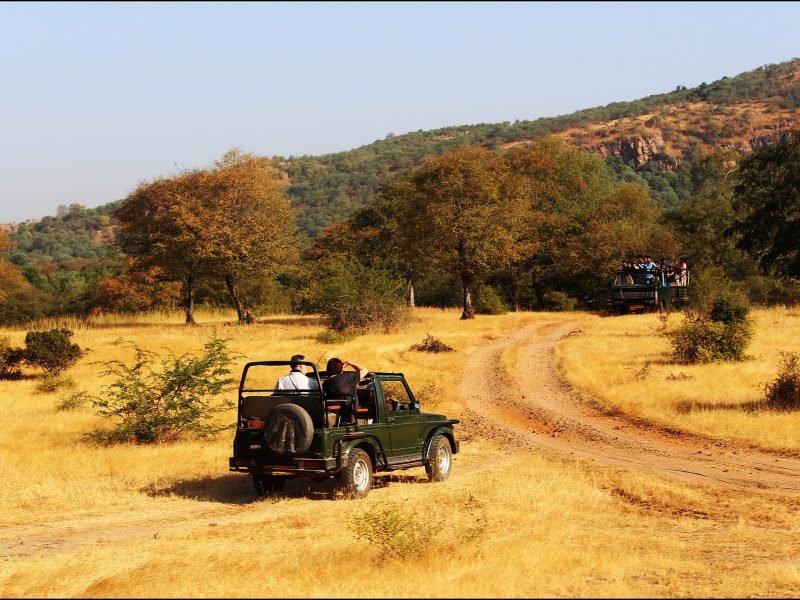
Many of our guests combine an early-morning safari with a fort visit in the same trip — the fort walls also happen to give some of the best elevated views over the safari zones below.
Getting There
The fort is a short drive from most hotels in Sawai Madhopur, with a walkable (if steep) path up from the parking area near Jogi Mahal. We can arrange a driver and guide for a half-day heritage tour if you’d like the history properly explained rather than just wandering the ruins solo.