Photographing wildlife from a moving, open-top vehicle, often in harsh midday light or fading dusk, is genuinely challenging. A little preparation goes a long way toward coming home with photos you’re actually happy with.
Gear: What You Actually Need
A telephoto lens in the 100–400mm range covers most situations — long enough for a distant tiger at a waterhole, short enough to still frame the animal in its habitat if it walks close to the track. If you only own one lens, this range is the safest bet. A second body or a wide-angle lens is useful for landscape and habitat shots, but not essential for a first trip.
Camera Settings for Moving Subjects
- Shutter speed: keep it at 1/1000s or faster for a walking tiger; you can drop to 1/500s for a resting one.
- Autofocus mode: continuous/tracking AF (AI Servo / AF-C) with a single or small group focus point on the animal’s eye.
- Aperture: wide open (f/4–f/5.6) for subject separation, unless you specifically want more of the scene in focus.
- ISO: let it float — in Ranthambore’s bright daylight it usually stays low, but be ready to raise it for dawn/dusk light without hesitation. A slightly noisy in-focus shot beats a clean blurry one.
Dealing with Dust and Vehicle Shake
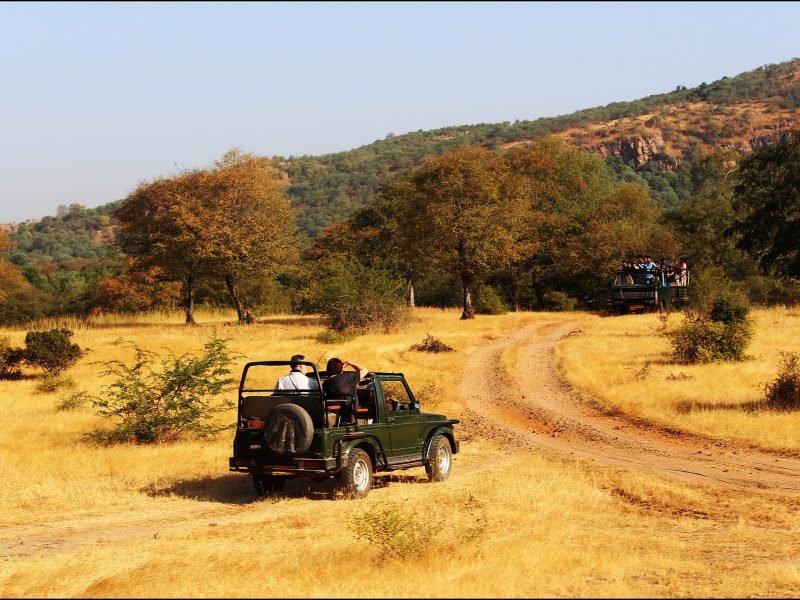
The Gypsy’s engine vibration and the park’s dusty tracks are real obstacles. Brace your elbows against the vehicle frame rather than holding the lens purely by hand, and consider a beanbag if you’re bringing a longer lens. Turn off the engine isn’t an option once you’ve stopped for a sighting, so a faster shutter speed compensates for the vibration.
Light and Timing
Morning safaris often give you soft, warm light in the first hour, followed by harsher overhead light by mid-morning. Evening safaris reverse this. If sighting odds allow, positioning for backlit or side-lit shots near golden hour produces the most dramatic images — but don’t obsess over the “perfect” light at the expense of just watching the animal.
Your guide and driver have photographed hundreds of safaris between them. Tell them early if photography is your priority — they’ll position the vehicle differently than they would for a family just wanting to see the tiger.
Etiquette Reminder
No flash photography on tigers, ever. Keep noise down at a sighting, and never ask your driver to leave the designated track to get a better angle — both are against forest department rules and genuinely disturb the animals.