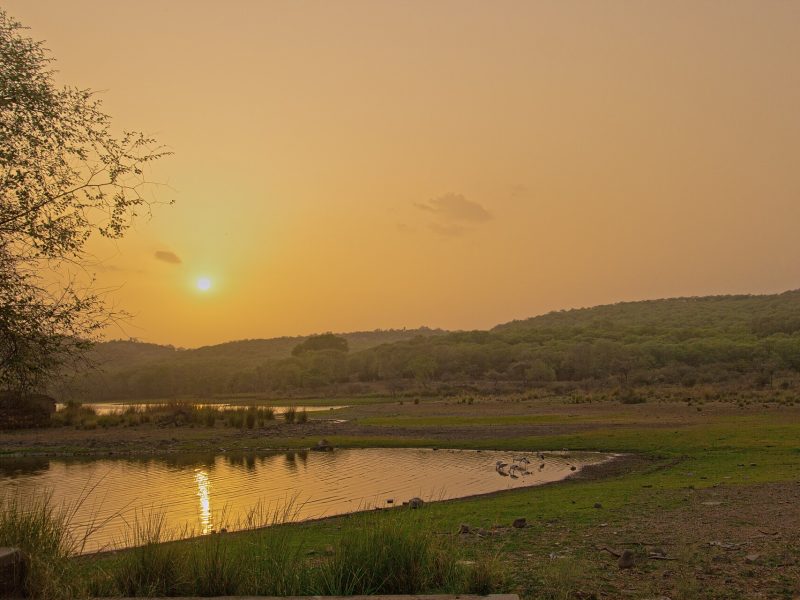
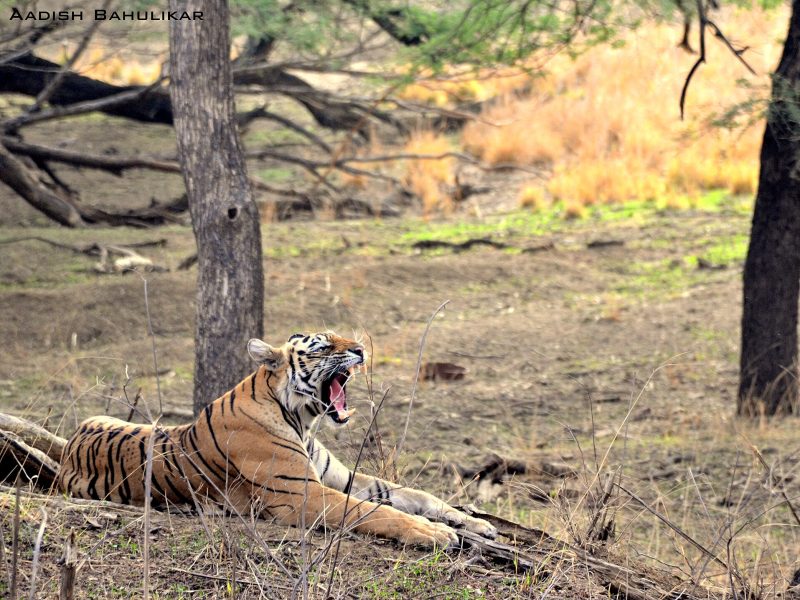
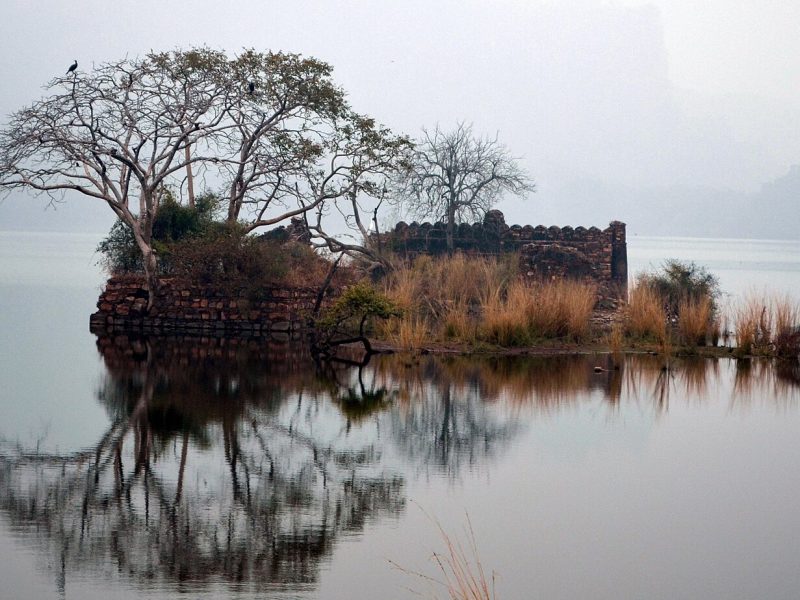
Tigers understandably get the headlines, but Ranthambore is also one of India’s richer birding destinations, with over 300 recorded species thanks to its mix of lakes, dry deciduous forest and open grassland.
Around the Lakes
Padam Talab, Raj Bagh and Malik Talab attract the highest concentration of waterbirds. Look out for kingfishers perched motionless before a dive, painted storks wading the shallows, and — in winter — migratory waterfowl including various ducks that arrive to escape colder northern climates.
Raptors and Larger Birds
Crested serpent eagles, various vultures, and owls (including the resident spotted owlet) are regularly seen across the park’s forested zones. Their presence is also a useful cue for guides — a sudden burst of alarm activity from smaller birds sometimes signals a predator moving through the undergrowth below.
Colourful Residents
The Indian roller — Rajasthan’s state bird — is a common and strikingly colourful sight perched on bare branches, flashing brilliant blue in flight. Green pigeons, drongos, bee-eaters and parakeets round out a genuinely vivid supporting cast around every safari.
Best Time for Birding
Winter (November–February) is peak season thanks to migratory arrivals, but resident species are visible year-round. Early morning safaris tend to be more productive for birdlife, since many species are most active in the first couple of hours after sunrise.
If birding is your main interest, ask us to flag it when booking — some guides specialise in bird identification and will pace the safari differently than a purely tiger-focused drive.
Bringing the Right Gear
Binoculars matter more for birding than for tiger sightings, since many species are smaller and further off. A field guide app or a printed checklist for Ranthambore helps you keep track through the day, especially if you’re chasing a personal species list.